
Introduction
Understanding liquid measurements is a fundamental skill that proves useful in a myriad of everyday situations, from cooking and baking to mixing drinks and understanding product packaging. One common conversion that frequently puzzles people is determining “how many oz in 750 ml.” This guide aims to demystify this conversion, providing a clear, step-by-step approach to understanding the relationship between milliliters (ml) and fluid ounces (oz). We will explore the different types of ounces, the conversion factors involved, and practical examples to solidify your understanding. By the end of this article, you will be able to confidently convert 750 ml to ounces and apply this knowledge in various contexts.

The metric system, which uses milliliters, is widely adopted globally for its simplicity and base-10 structure. However, the imperial and U.S. customary systems, which use fluid ounces, are still prevalent in certain regions, notably the United States. This coexistence of measurement systems often necessitates conversions, and knowing the exact conversion factor is key to accuracy. Whether you are a home cook following a recipe from abroad, a bartender measuring ingredients, or simply curious about the volume of your favorite beverage, mastering this conversion is incredibly beneficial.
Key Points
Understanding Milliliters (ml)
Milliliters are a unit of volume in the metric system. One milliliter is equal to one-thousandth of a liter. The metric system is known for its logical structure, where units are related by powers of ten. This makes conversions within the metric system straightforward (e.g., 1 liter = 1000 milliliters). Milliliters are commonly used for measuring small volumes of liquids, such as dosages of medicine, ingredients in recipes, or the capacity of bottles and containers.
Understanding Fluid Ounces (oz)
Fluid ounces, on the other hand, are a unit of volume found in both the imperial system (used in the UK and some Commonwealth countries) and the U.S. customary system. It is crucial to understand that a U.S. fluid ounce is slightly different from an imperial fluid ounce. This distinction is vital for accurate conversions, especially when dealing with international recipes or products.
- U.S. Fluid Ounce: Approximately 29.5735 milliliters.
- Imperial Fluid Ounce: Approximately 28.4131 milliliters.
For the purpose of converting 750 ml to ounces, we will primarily focus on the U.S. fluid ounce, as it is the more commonly encountered unit in contexts where this specific conversion is sought.
The Conversion Factor
To convert milliliters to fluid ounces, you need a conversion factor. As established, 1 U.S. fluid ounce is approximately 29.5735 ml. Therefore, to find out how many ounces are in a given number of milliliters, you divide the milliliter value by this conversion factor.
Step-by-Step Conversion: 750 ml to U.S. Fluid Ounces
- Identify the value in milliliters: In this case, it is 750 ml.
- Recall the U.S. fluid ounce conversion factor: 1 U.S. fluid ounce ≈ 29.5735 ml.
- Perform the division: Divide the milliliters by the conversion factor.
Calculation: 750 ml / 29.5735 ml/oz = 25.3605 oz (approximately)
Therefore, 750 ml is approximately equal to 25.36 U.S. fluid ounces.
Step-by-Step Conversion: 750 ml to Imperial Fluid Ounces (for completeness)
- Identify the value in milliliters: Again, 750 ml.
- Recall the Imperial fluid ounce conversion factor: 1 Imperial fluid ounce ≈ 28.4131 ml.
- Perform the division: Divide the milliliters by the conversion factor.
Calculation: 750 ml / 28.4131 ml/oz = 26.3956 oz (approximately)
Therefore, 750 ml is approximately equal to 26.40 Imperial fluid ounces.
Practical Applications of the Conversion
Knowing how many oz are in 750 ml has several practical applications:
- Beverage Bottles: Many wine and spirit bottles are sold in 750 ml sizes. Understanding this conversion helps consumers in countries using fluid ounces to gauge the volume. For instance, a standard 750 ml bottle of wine contains roughly 25.36 U.S. fluid ounces. This can be useful when planning servings or comparing prices.
- Cooking and Baking: Recipes from different regions might use different units. If you have a recipe that calls for a certain amount in milliliters and your measuring tools are in ounces, this conversion is essential for accuracy.
- Measuring Medications: While medical dosages are typically precise and should always follow doctor’s instructions or packaging labels, understanding unit conversions can provide an additional layer of comprehension, though direct conversion for medication should be done with extreme caution and professional advice.
- International Travel and Shopping: When purchasing liquids abroad, knowing how to convert between ml and oz can help you understand product sizes and make informed decisions.
Common Bottle Sizes and Their Ounce Equivalents
Let’s look at some common bottle sizes and their approximate U.S. fluid ounce equivalents based on the 750 ml conversion:
| Milliliters (ml) | U.S. Fluid Ounces (oz) | Common Product |
|---|---|---|
| 50 ml | 1.7 oz | Miniature liquor bottle |
| 187 ml | 6.3 oz | Small wine bottle (single serving) |
| 375 ml | 12.7 oz | Half bottle of wine/liquor |
| 750 ml | 25.4 oz | Standard wine/liquor bottle |
| 1000 ml (1 liter) | 33.8 oz | Large juice or spirit bottle |
| 1750 ml (1.75 liters) | 59.2 oz | Large spirit bottle |
As you can see, the 750 ml size is a very common standard, particularly for alcoholic beverages. Knowing its ounce equivalent helps in various consumer scenarios.
Tips for Easy Conversion
- Memorize Key Factors: While calculators are handy, knowing that 1 oz is approximately 30 ml (a simplified but useful approximation) can help with quick mental estimates. For precise calculations, use 29.5735 ml/oz.
- Use Online Converters: Many websites and smartphone apps offer quick and accurate unit conversions. These are excellent tools for on-the-spot calculations.
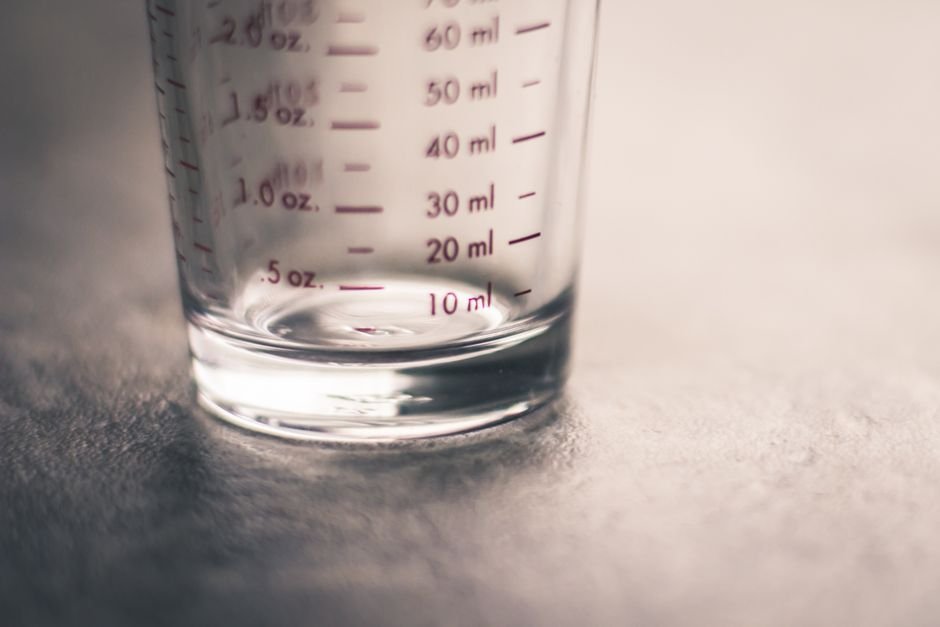
- Label Your Measuring Tools: If you frequently switch between metric and imperial units, consider labeling your measuring cups or spoons with both units for quick reference.
FAQs
Q: Is a U.S. fluid ounce the same as an imperial fluid ounce?
A: No, they are slightly different. A U.S. fluid ounce is approximately 29.5735 ml, while an imperial fluid ounce is approximately 28.4131 ml. This difference, though small, can become significant in larger volumes or precise applications.
Q: Why are alcohol bottles often 750 ml?
A: The 750 ml size for wine and spirits became a standard largely due to historical trade agreements and regulations, particularly in the European Union and eventually adopted internationally. It’s a convenient size for packaging, transportation, and consumer purchase.
Q: How many standard drink servings are in a 750 ml bottle of wine?
A: A standard serving of wine is typically considered 5 fluid ounces. Since 750 ml is approximately 25.36 U.S. fluid ounces, a 750 ml bottle of wine contains roughly 5 servings (25.36 oz / 5 oz per serving = 5.07 servings). This can vary based on the actual pour size.
Q: Can I use a kitchen scale to convert ml to oz?
A: A kitchen scale measures weight, not volume. While ml and oz are units of volume, you can use a scale to measure liquids by weight if you know the liquid’s density. For water, 1 ml weighs approximately 1 gram, so 750 ml of water would weigh about 750 grams. Converting grams to ounces (weight) is a different conversion (1 oz (weight) = 28.35 grams). However, for direct volume conversion, a measuring cup with appropriate markings is best.
Q: Is 750 ml considered a large or small volume for beverages?
A: For many beverages, 750 ml is considered a standard or medium-sized bottle. For wine and spirits, it’s the most common retail size. For other drinks like water or soda, it’s a common single-serving or personal-sized bottle, though larger 1-liter or 2-liter options are also prevalent.
Q: What is the significance of understanding these conversions in daily life?
A: Understanding these conversions helps in numerous daily activities. It assists in following recipes accurately, especially those from different countries. It allows you to correctly interpret product labels, whether for food, beverages, or household chemicals. Furthermore, it aids in making informed purchasing decisions and understanding consumption quantities. For example, if you are following a recipe that calls for 750 ml of liquid and your measuring cup only has ounce markings, knowing this conversion is crucial. Similarly, if you are interested in how to open wine without a corkscrew, understanding the bottle’s volume might be a secondary consideration, but knowing its capacity in ounces can be useful for serving.
Conclusion
The question of “how many oz in 750 ml” is a common one, reflecting the need to navigate between different systems of measurement. As we’ve explored, 750 ml is approximately 25.36 U.S. fluid ounces and 26.40 Imperial fluid ounces. This seemingly simple conversion is a gateway to better understanding product packaging, accurately following recipes, and making informed decisions in various aspects of daily life. By understanding the conversion factors and the slight differences between U.S. and Imperial fluid ounces, you are now equipped with the knowledge to confidently perform this conversion whenever necessary. Whether you’re a culinary enthusiast, a beverage connoisseur, or simply someone who appreciates precision, mastering this conversion is a valuable skill in a world that often uses both metric and imperial units interchangeably.